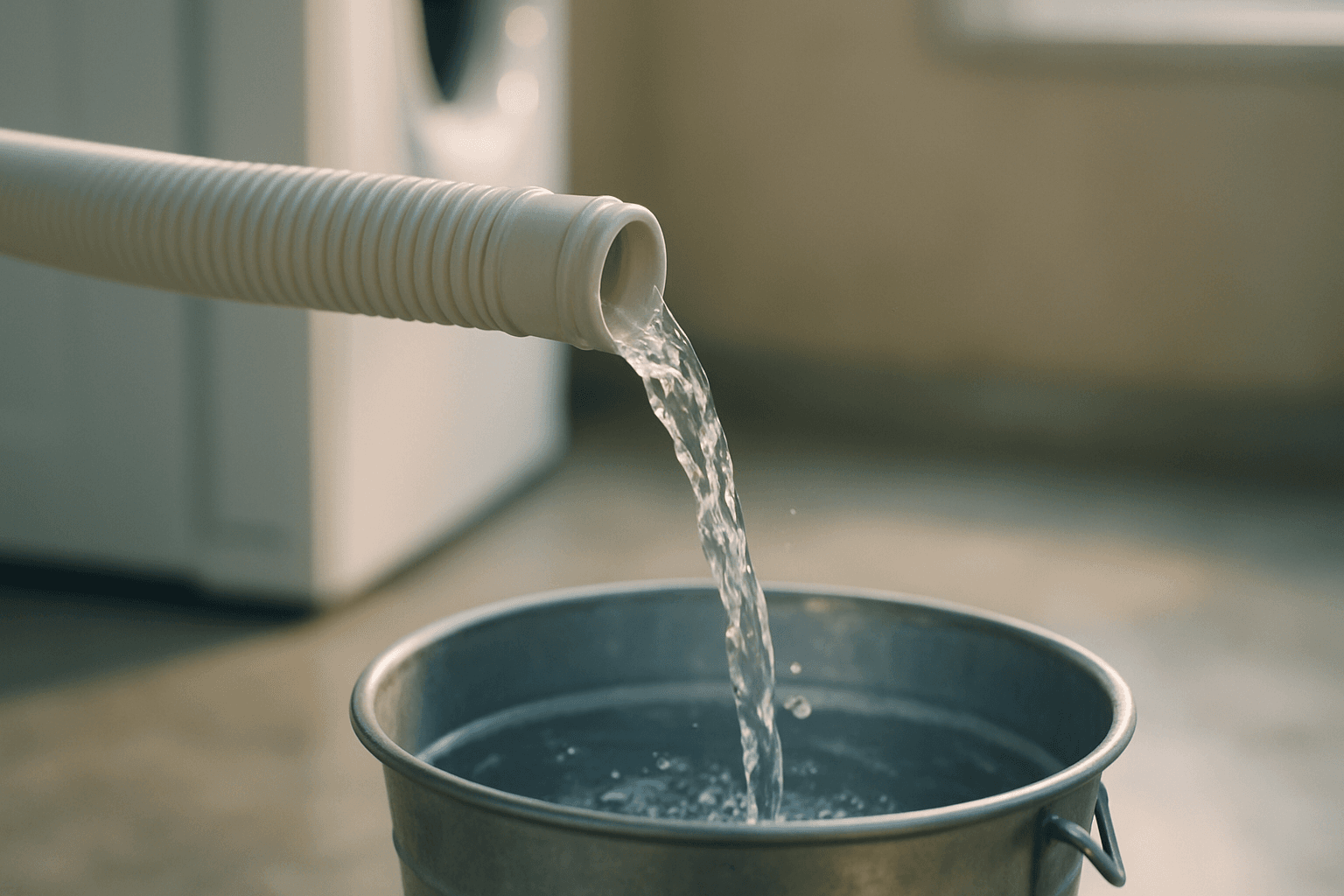
Why your washer needs a drain-line flush before autumn rains hit
As West Vancouver heads into wet season, a clogged drain line can turn a minor leak into a laundry room flood. Here's what to check now.
Key takeaways
- Slow drainage or standing water after the cycle is your first warning sign.
- Lint and soap scum accumulate year-round and worsen in damp Metro Vancouver fall weather.
- A clogged drain line can back up into your laundry room during heavy rain.
- You can flush a drain hose yourself—no special tools needed.
- Professional drain inspection catches hidden blockages before they flood.
Why autumn drain clogs matter more than you think
West Vancouver gets serious rainfall starting in September, and your washing machine's drain line is about to work overtime. If that line is partially blocked, water has nowhere to go—and backing up into your laundry room is far more likely when the ground is already saturated. A drain-line flush now takes 20 minutes and could save you thousands in water damage.
How lint and soap build up over time
Your washer's drain line collects lint, detergent residue, and the occasional coin or button every single cycle. In our humid Lower Mainland summers, that debris sits in a warm, moist environment—perfect conditions for soap scum to harden and lint to pack down. By Labour Day, you might already have a partial blockage that you haven't noticed yet.
The problem worsens once autumn rains arrive. Your home's drainage system becomes pressurised, and if your washer's drain line is even half-blocked, water backs up instead of flowing out. You'll see it pooling on your laundry room floor after the rinse cycle.
Signs your drain line needs attention now
Don't wait for a flood. Watch for these red flags:
**Slow drainage.** The tub empties sluggishly, taking 30 seconds or more after the cycle ends.
**Standing water.** A small puddle remains in the drum after the spin cycle completes.
**Musty or sour smells.** Blocked drain lines trap water and create a breeding ground for mould and bacteria.
**Gurgling sounds.** Air bubbles trapped in a clogged line create unexpected noises during the drain phase.
If you notice any of these, your drain line needs a flush—and the sooner, the better.
How to flush your drain line yourself
Start by locating your washer's drain hose. Most machines have a rubber hose connected to the back, usually running to a standpipe, sink, or floor drain.
Turn off the water supply to your washer. Disconnect the drain hose at the back of the machine—have a bucket or towel ready, as there may be residual water inside. If the hose is connected to a standpipe or wall fitting, disconnect it there too.
Hold the hose over a bucket or bathtub and run warm water through it from your sink. You're looking for any debris, lint clumps, or soap buildup that blocks the flow. If water barely trickles through, you've found your clog. Let water run for 30 seconds to flush it clear.
Reconnect the hose, ensuring both connections are tight and secure. Run a test cycle without clothes to confirm the water drains smoothly.
When to call a professional
If water flows freely through the hose but your washer still drains slowly, the blockage is deeper—inside the machine's internal drain pump or the home's drainage system. This is where a professional inspection becomes worthwhile. We can use a camera to locate the exact blockage and clear it without damaging your plumbing.
West Vancouver's older homes sometimes have drainage issues compounded by tree roots or settled ground, especially as autumn rains increase water pressure. A professional can identify whether your slow drain is a simple lint clog or a sign of a larger problem.
The best time to act is now
September is still dry enough to work on your laundry room comfortably, and you'll head into the rainy season with confidence. A five-minute drain-line inspection every three months keeps your washer running smoothly and your laundry room dry.
Need a hand from a real technician?
Our licensed pros repair washers and dryers across Metro Vancouver — same-day and next-day, with 90-day parts warranty + 7-day satisfaction guarantee.
Keep reading
Halloween candy wrappers and dryer fires: why your lint trap needs daily checks now
October's trick-or-treat season means sticky fingers, wrapper debris, and a hidden fire hazard in your dryer. Here's what Burnaby homeowners need to know.
Costume cleanup: why your washer's cold-water cycle needs a pre-rinse now
Halloween costumes bring mud, fake blood, and stubborn stains. Here's why a quick pre-rinse before the main wash saves your machine—and your clothes.