Before Labour Day: why your dryer's thermal fuse fails in humid Surrey summers
A blown thermal fuse is the #1 reason dryers stop heating before the long weekend. Here's why Metro Vancouver's August humidity triggers it—and how to prevent a holiday breakdown.
Key takeaways
- Lint clogs the exhaust vent in humid climates; trapped heat triggers the thermal fuse to blow as a safety measure.
- Surrey's August humidity makes lint damper and stickier, accelerating vent blockage compared to drier seasons.
- A blown fuse stops all heat—clothes won't dry—and costs $150–$300 to replace, plus repair call fees.
- Clean the lint trap before every load, vacuum the vent hood, and inspect the exhaust duct for kinks or lint.
- If your dryer takes twice as long or stops heating mid-cycle, the thermal fuse likely blew; don't attempt DIY replacement.
What a thermal fuse does (and why it fails)
Your dryer's thermal fuse is a one-time safety switch. When internal temperature climbs too high—usually because lint blocks airflow—the fuse melts and cuts power to the heating element. It's not a reusable breaker; once blown, it's dead. You'll notice your dryer tumbling normally but producing no heat.
This isn't a design flaw. It's a fire-prevention feature. Lint-clogged dryers are a leading cause of home dryer fires across Canada.
Why August humidity in Metro Vancouver speeds up fuse failure
Lint becomes a problem faster in summer because of moisture. Metro Vancouver's coastal humidity—especially in Surrey, where August averages around 60–70% relative humidity—makes lint damp and sticky. Damp lint compacts inside the exhaust vent and duct instead of flowing freely. The dryer works harder to push air through, heat builds up, and the thermal fuse blows within weeks instead of years.
If you've noticed your dryer running longer or feeling hotter to the touch lately, humidity is likely the culprit.
How to prevent a Labour Day breakdown
You have nine days before the long weekend. Here's what to do:
**Clean the lint trap properly.** Most people pull out the screen and wipe it. That's not enough. Use a vacuum crevice tool to clean the slot where the trap sits—lint compacts there. Do this before every load.
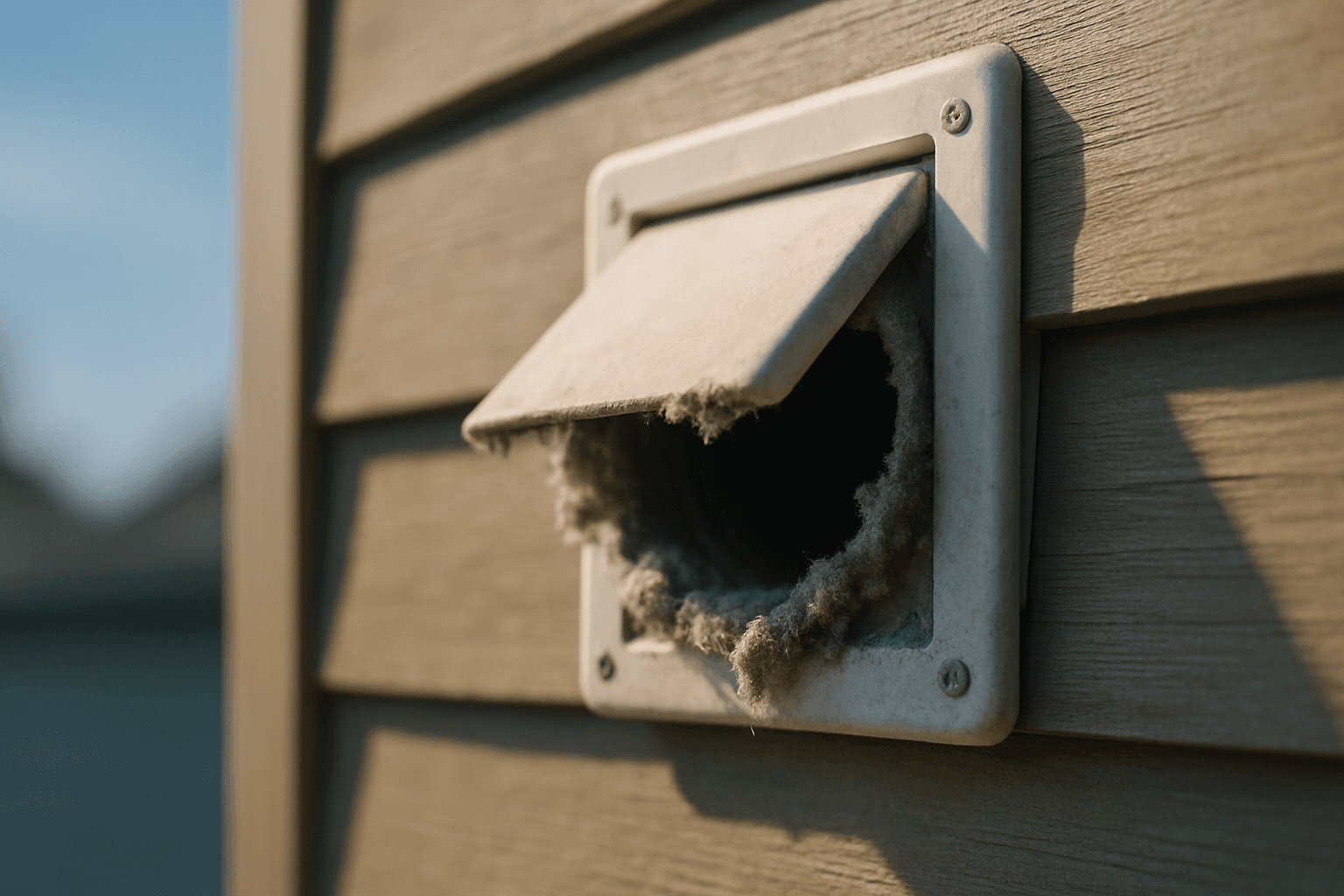
**Check the exhaust vent hood outside.** Walk around your home and look at the dryer vent opening. Is it clear? Push gently on the flapper. It should open and close freely. If lint is visible or the flapper is stiff, clear it now. A blocked hood is the most common cause of fuse failure.
**Inspect the exhaust duct.** If you can safely access the duct (the flexible or rigid pipe running from the back of your dryer to the wall vent), look for kinks, compression, or visible lint buildup. Straighten any kinks. If lint is caked inside, vacuum it out or call for a professional duct cleaning—it's $80–$150 and worth every dollar before Labour Day.
**Dry loads more frequently.** Running smaller, more frequent loads reduces internal heat and lint accumulation. It's a simple habit that pays off in September.
Signs your thermal fuse is about to blow
Watch for these warnings:
- Clothes take 60+ minutes to dry on a normal cycle (should take 30–45 minutes).
- The dryer drum turns but no heat is produced.
- The dryer feels unusually hot to the touch on the outside.
- You smell a faint burning scent (lint scorching inside).
If any of these happen, stop using the dryer and have it inspected. A technician can confirm the fuse and replace it safely—DIY replacement voids warranties and risks electrical injury.
Why now matters
Labour Day weekend is when household appliances fail. Families are home, laundry piles up, and suddenly your dryer won't heat. A fuse replacement takes 1–2 hours, but booking a repair during the holiday rush can mean a week-long wait. Spending 20 minutes today on vent maintenance saves you stress, money, and wet clothes in nine days.
Metro Vancouver's humid summers are beautiful, but they're tough on dryers. A little prevention goes a long way.
Need a hand from a real technician?
Our licensed pros repair washers and dryers across Metro Vancouver — same-day and next-day, with 90-day parts warranty + 7-day satisfaction guarantee.
Keep reading
Halloween candy wrappers and dryer fires: why your lint trap needs daily checks now
October's trick-or-treat season means sticky fingers, wrapper debris, and a hidden fire hazard in your dryer. Here's what Burnaby homeowners need to know.
Costume cleanup: why your washer's cold-water cycle needs a pre-rinse now
Halloween costumes bring mud, fake blood, and stubborn stains. Here's why a quick pre-rinse before the main wash saves your machine—and your clothes.