Before Labour Day: why your washer's fill cycles are slower in late summer
Water pressure dips when demand peaks. Here's how to spot it—and whether you need a repair before the long weekend.
Key takeaways
- Water pressure naturally drops on hot days when neighbours' air conditioning and outdoor watering peak.
- Slow fill doesn't always mean a broken washer—it often signals a clogged inlet valve or kinked hose.
- Test pressure by filling a bucket from your kitchen tap while the washer is idle.
- Richmond's older homes may have undersized supply lines that worsen during high-demand hours.
- A professional inspection costs less than running repeated cycles with low water levels.
Why your washer fills slowly in August
It's late August in Richmond, and your washing machine is taking forever to fill. You're not imagining it. When temperatures climb and humidity sits high across Metro Vancouver, municipal water systems experience a genuine pressure dip—especially between 8 a.m. and 10 a.m., and again in the early evening when neighbours are watering lawns, filling pools, and running air conditioning.
Your washer doesn't care much about pressure *per se*, but it does care about the rate at which water flows into the inlet valves. When system pressure drops, those valves open normally, but less water makes it through in the same time window. The result: a 15-minute fill that stretches to 25 minutes.
How to tell if it's pressure or a problem
Before you worry about repair costs, run a simple test. While your washer sits idle, fill a bucket from your kitchen tap—hot and cold—and time it. If it takes noticeably longer than usual, the issue is likely municipal pressure, not your machine.
If your tap fills normally but the washer still crawls, the culprit is probably inside your washer: a kinked inlet hose, a clogged fill valve, or mineral deposits blocking the valve screen. These issues don't resolve on their own and will persist into autumn.
What to check yourself
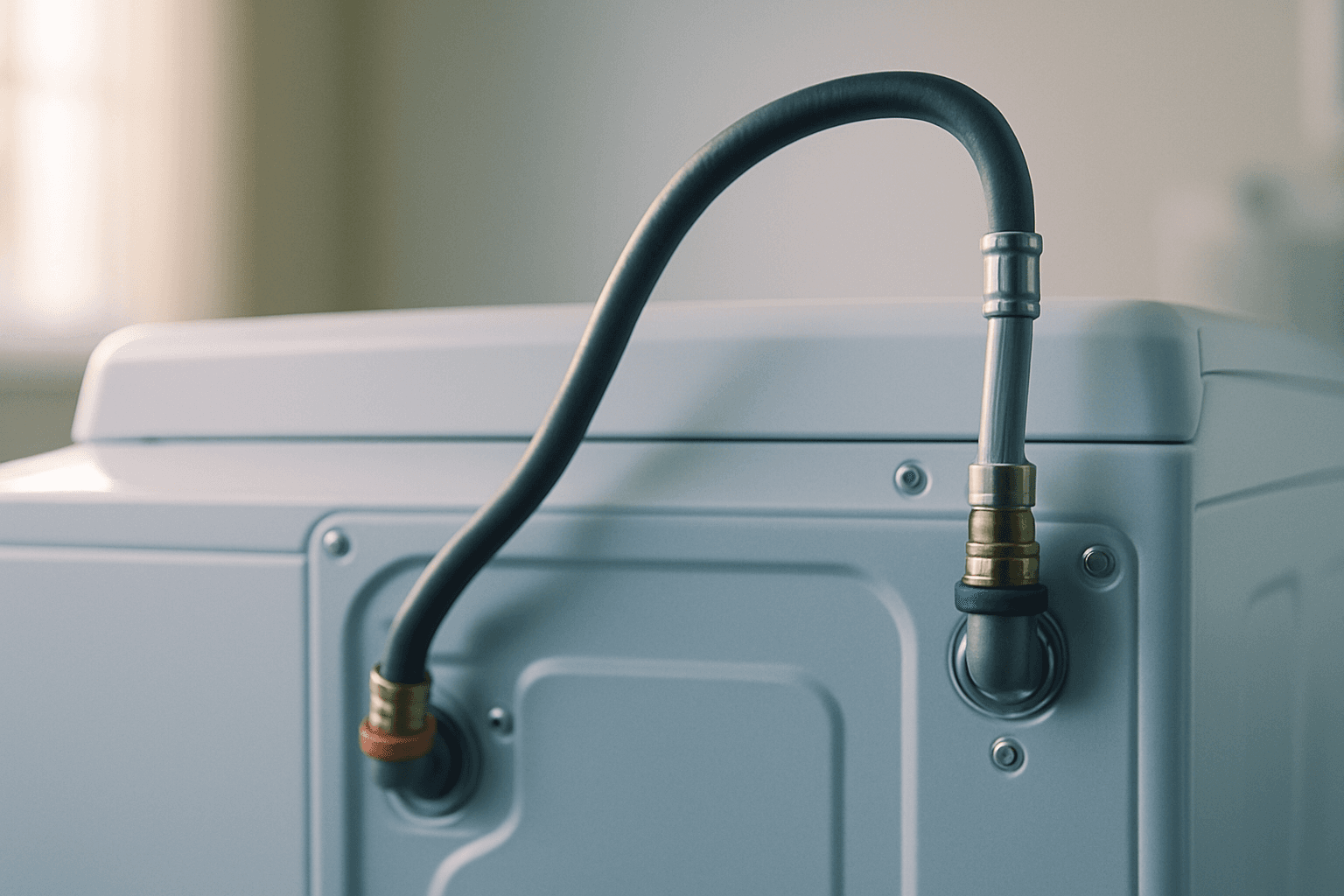
First, inspect both inlet hoses—the one connected to the hot tap and the one connected to the cold tap—for kinks, cracks, or bends. Straighten any kinks by hand. If a hose is cracked, replace it; a leaking inlet hose can cause water damage.
Second, if your home is in an older Richmond neighbourhood with hard water (common in parts of Sea Island and South Richmond), mineral deposits may have built up inside the fill valve screens. Unscrew the inlet hose from the back of the washer, and you'll see a small mesh screen. Hold it under warm running water and gently brush it with an old toothbrush. Reattach and test.
When to call a technician
If pressure is normal elsewhere in your home, both hoses are clear, and the valve screens are clean—but your washer still fills slowly—the fill valve itself may be failing. Fill valves wear out over time, especially in areas with mineral-heavy water. A technician can test the valve's solenoid and replace it if necessary, usually in under an hour.
Labour Day weekend often brings a surge of laundry—back-to-school clothes, bedding before guests arrive, post-summer deep cleans. If your washer is already slow, that extra load can back up your entire week. A $200 valve replacement now beats a week of hand-washing later.
The pressure perspective
Municipal pressure does recover once the heat breaks and autumn rains return to the Lower Mainland. But if your problem is internal, it won't. Give yourself a week into September; if fill times haven't improved, don't wait. A quick diagnosis now means you'll start the school year with a fully functional machine.
Need a hand from a real technician?
Our licensed pros repair washers and dryers across Metro Vancouver — same-day and next-day, with 90-day parts warranty + 7-day satisfaction guarantee.
Keep reading
Halloween candy wrappers and dryer fires: why your lint trap needs daily checks now
October's trick-or-treat season means sticky fingers, wrapper debris, and a hidden fire hazard in your dryer. Here's what Burnaby homeowners need to know.
Costume cleanup: why your washer's cold-water cycle needs a pre-rinse now
Halloween costumes bring mud, fake blood, and stubborn stains. Here's why a quick pre-rinse before the main wash saves your machine—and your clothes.