Why your washer overflows in summer humidity—and how to prevent it
Metro Vancouver's July humidity can confuse your washing machine's water-level sensors. Here's why—and the simple fix that stops costly leaks.
Key takeaways
- Humidity can cause water-level sensors to trigger overflow even when the drum isn't full.
- Clean sensor contacts monthly during humid months to restore accuracy.
- Check that drain hoses slope downward and aren't kinked or blocked.
- Ensure inlet valve screens are free of mineral debris from summer heat.
- A faulty sensor always needs professional replacement—DIY fixes are temporary.
The summer humidity problem
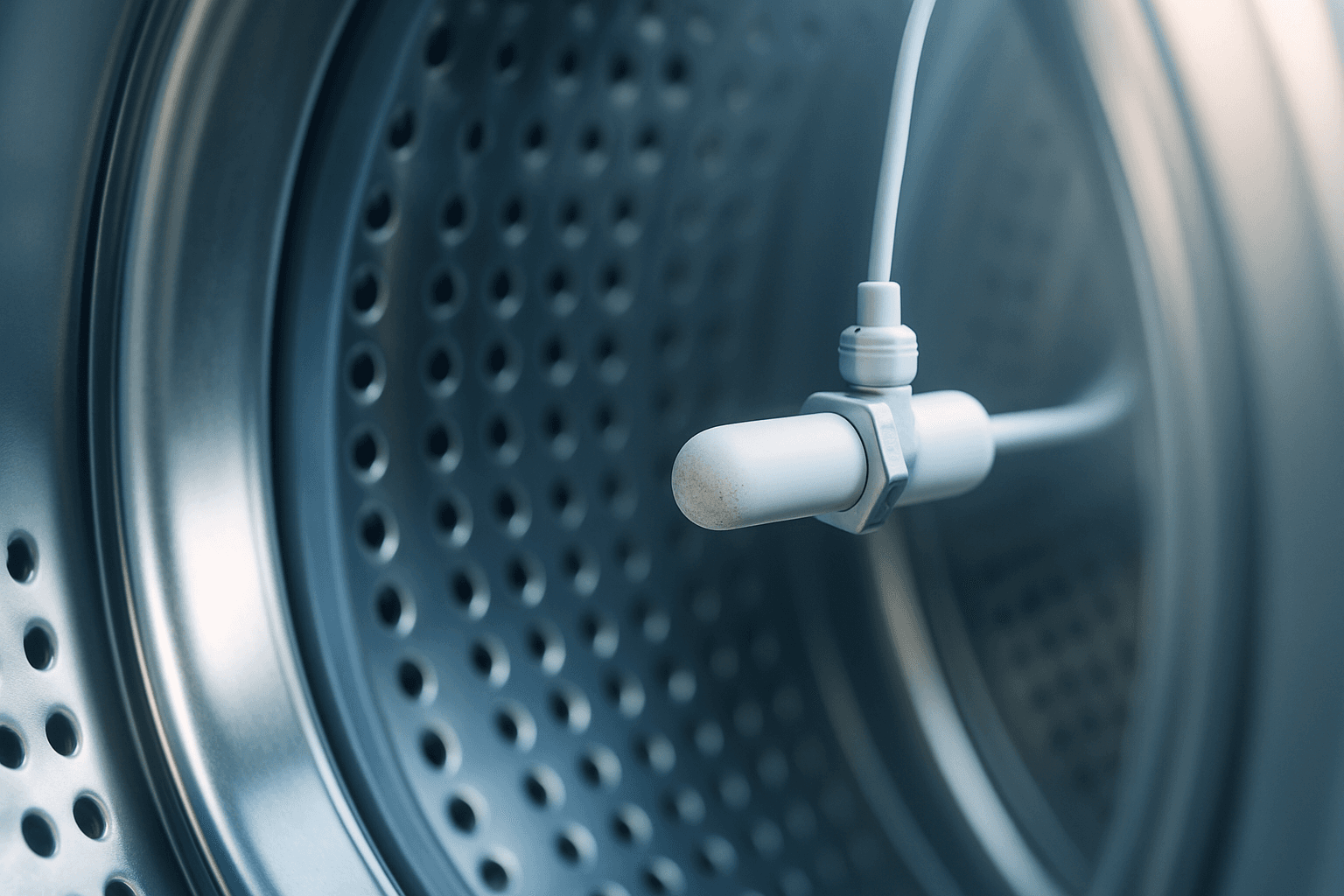
July in Metro Vancouver brings more than warm days—it brings moisture in the air that your washing machine wasn't designed to ignore. When humidity levels spike (and they do in Richmond and across the Lower Mainland), the capacitive sensors inside your washer that measure water level can become confused. Instead of detecting water in the drum, they detect moisture in the air around them, sending false signals that tell your machine the tub is full when it isn't. The result: your washer stops mid-cycle, overflows, or refuses to start—right when you need it most before the long weekend.
Why this happens in July
Washing machine sensors work by measuring electrical capacitance—essentially, how well moisture conducts electricity. On a dry winter day in Vancouver, that's straightforward. But on a humid summer afternoon when the air itself is saturated with water vapour, the sensor's electronics get confused about what's inside the drum versus what's in the surrounding air. This is especially common in older machines and in homes with poor laundry-room ventilation.
Richmond homes, with their proximity to the Fraser River and summer afternoon humidity, see this problem more often than you'd expect. Even a few percentage points of extra humidity can be enough to throw off a sensitive sensor.
How to fix it yourself
Start by checking the sensor contacts. Most top-load machines have a small plastic tube or probe near the water inlet; front-loaders have sensors mounted on the drum rim or sidewall. If you can access them safely (unplug the machine first), wipe the sensor contacts with a dry cloth or cotton swab. Mineral deposits from our hard Metro Vancouver water can also coat the sensor and interfere with readings.
Next, inspect your drain hose. A kinked, clogged, or incorrectly sloped drain line can trap water and trigger false overflow readings. The hose should slope downward from the machine to your standpipe or sink, never upward. Clear any lint or debris from the drain opening.
Finally, check the inlet valve screens where water enters your machine. Summer heat can cause mineral buildup that reduces water flow, making your machine think it's overflowing when it's actually just confused about how much water has actually entered. Turn off the water supply, unscrew the inlet hoses, and rinse the small screens under running water.
When to call for help
If cleaning the sensor and checking the drain line doesn't solve the problem, the sensor itself has likely failed. Capacitive sensors can wear out, especially in humid climates, and they cannot be repaired—only replaced. A professional technician will test the sensor with a multimeter, confirm it's faulty, and install a new one. This is a straightforward repair that takes less than an hour.
Don't ignore overflow problems. Water pooling around your washer can damage your flooring and create conditions for mould growth—particularly risky in Vancouver's damp climate. A sensor replacement now is far cheaper than repairing water damage to your laundry room.
Prevention going forward
During July and August, run your laundry room exhaust fan during and for 20 minutes after every wash cycle. This removes humid air and helps your machine's sensors stay accurate. If you don't have an exhaust fan, crack a window or door nearby. Store your machine with the door or lid open between uses so moisture doesn't accumulate inside.
If you live in Richmond or anywhere across Metro Vancouver and notice your washer acting up this summer, don't wait until after BC Day to get it checked. A quick sensor cleaning or professional inspection now prevents emergency repairs when you're juggling holiday guests and laundry.
Need a hand from a real technician?
Our licensed pros repair washers and dryers across Metro Vancouver — same-day and next-day, with 90-day parts warranty + 7-day satisfaction guarantee.
Keep reading
Halloween candy wrappers and dryer fires: why your lint trap needs daily checks now
October's trick-or-treat season means sticky fingers, wrapper debris, and a hidden fire hazard in your dryer. Here's what Burnaby homeowners need to know.
Costume cleanup: why your washer's cold-water cycle needs a pre-rinse now
Halloween costumes bring mud, fake blood, and stubborn stains. Here's why a quick pre-rinse before the main wash saves your machine—and your clothes.