Why your washing machine's seal needs attention before summer heat peaks
Summer humidity and heat put extra stress on your washer's door seal. Here's what Vancouver homeowners should check now.
Key takeaways
- Summer heat accelerates rubber degradation in washer door seals.
- Mildew, visible cracks, or water pooling near the door signal seal failure.
- Clean your seal monthly with a damp cloth and white vinegar solution.
- A failed seal can flood your laundry room; replacement costs $200–$400.
- Check the seal every time you run a load during peak summer months.
Summer heat is harder on your washing machine's seal than you think
As Metro Vancouver enters its warmest months, homeowners often focus on keeping cool themselves—but your washing machine is working overtime in the heat. The rubber gasket that seals your washer's door is one of the most vulnerable parts during summer, and it's easy to overlook until water starts pooling on your laundry room floor.
Your door seal's job is simple: keep water inside the drum during the wash and spin cycles. But heat, humidity, and repeated thermal stress cause rubber to become brittle, crack, and lose its grip. In Vancouver's summer climate—especially during humid spells—moisture gets trapped between the seal and the door frame, creating the perfect conditions for mildew growth and premature failure.
What to look for right now
Start with a visual inspection. Open your washer door and look at the rubber gasket running around the frame. You're looking for three red flags:
**Visible cracks or tears.** Even small splits let water escape during the spin cycle.
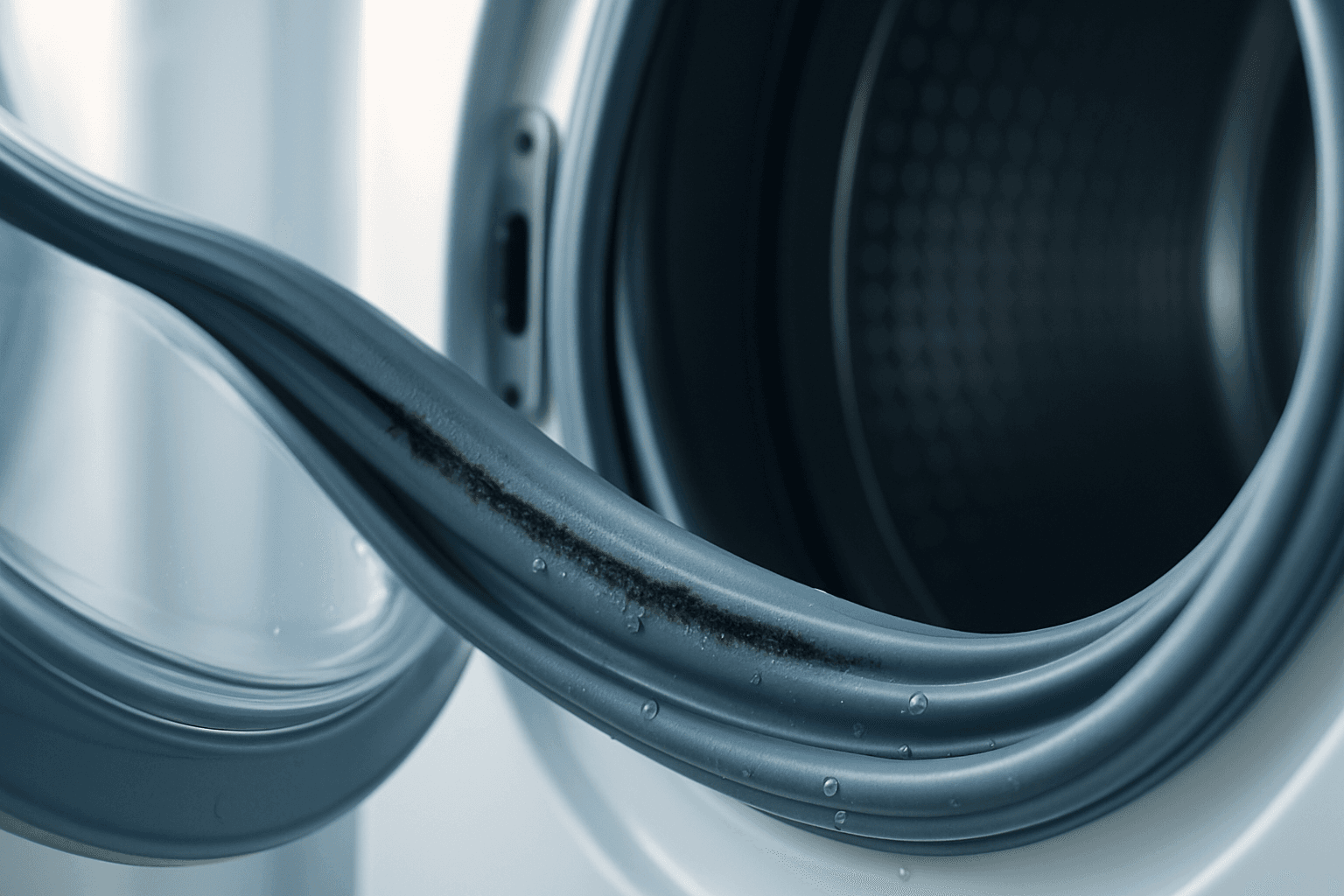
**Black or pink mildew.** If you see discolouration or smell mildew, the seal is trapping moisture and won't last much longer.
**Water pooling.** Run a short cycle and watch the floor around the machine. Any pooling water near the door means the seal isn't sealing properly.
How to extend your seal's life this summer
Clean your door seal monthly during the warm months. Use a damp cloth with a 50/50 white vinegar and water solution. Wipe along the entire rubber gasket, paying special attention to the folds where moisture and mildew hide. Dry it thoroughly with a clean towel.
After each load, wipe the seal dry and leave the door open for 20 minutes to air out. This simple habit cuts moisture buildup dramatically and is especially important in Vancouver's humid summer weather.
When to call for a replacement
If you spot cracks, tears, or persistent mildew that won't come clean, your seal needs replacing. Don't wait. A failing seal can leak hundreds of litres of water into your laundry room, potentially damaging your flooring, walls, and adjacent rooms. The cost to replace a seal is $200–$400 and takes about an hour. The cost to repair water damage is thousands.
Front-load washers are especially vulnerable because they rely entirely on the door seal to contain water. Top-load machines with agitators are more forgiving, but their seals still fail and should be checked.
A small task with big payoff
Take five minutes this week to inspect your seal. If it looks healthy, add "wipe and dry the door seal" to your post-laundry routine. It costs nothing and could save you from a flooded laundry room before Labour Day.
Need a hand from a real technician?
Our licensed pros repair washers and dryers across Metro Vancouver — same-day and next-day, with 90-day parts warranty + 7-day satisfaction guarantee.
Keep reading
Why your washer's spin cycle struggles in autumn—and how to fix it
As Metro Vancouver's humidity climbs this fall, excess moisture in your machine's drum and bearings can slow your spin cycle. Here's what's really happening.
Thanksgiving laundry crunch: why your washer's cycle time is slowing down now
As Thanksgiving hosting season hits, a sluggish wash cycle often signals a problem that's easy to fix—and crucial before the big cook.