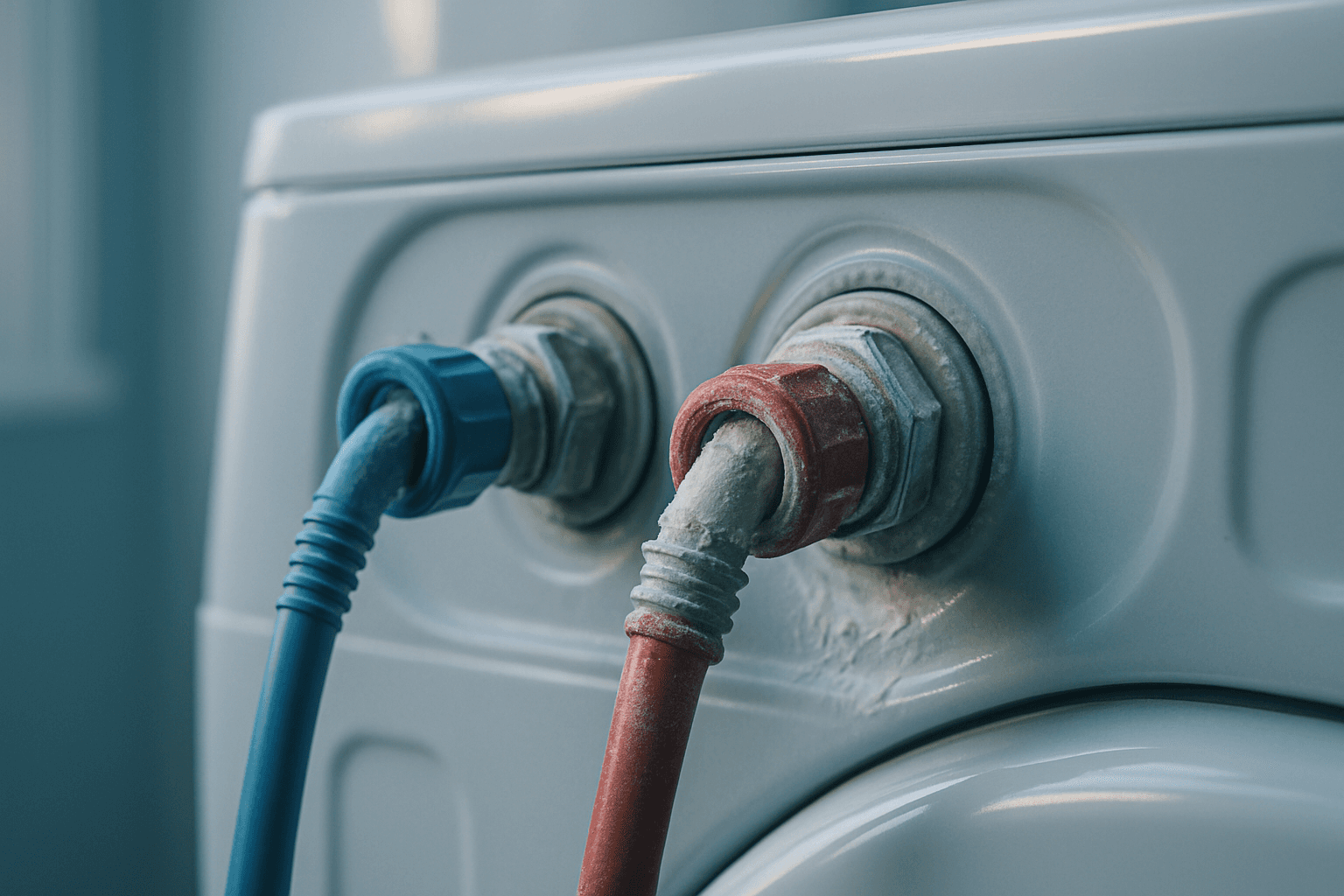
Summer humidity is clogging your washing machine's inlet valve—here's why
Metro Vancouver's damp June weather creates the perfect conditions for mineral buildup in your washer's water inlet. A quick inspection now prevents costly repairs later.
Key takeaways
- Inlet valve clogs cause weak water flow, uneven detergent mixing, and incomplete rinses.
- Metro Vancouver's hard water deposits accelerate buildup in humid summer conditions.
- Flushing inlet screens takes 15 minutes and costs nothing; ignoring it risks a $200+ repair.
- If your washer fills slowly or unevenly, the inlet valve is likely the culprit.
- White Rock's proximity to saltwater air can worsen mineral accumulation in some homes.
Your washing machine's inlet valve sits where hot and cold water lines connect to the machine. Inside that valve are two tiny screens designed to catch sediment and minerals before they enter the drum. In summer, when Metro Vancouver's humidity is highest and our hard water minerals are most concentrated, those screens clog faster than most homeowners realize.
You'll know there's a problem when your washer fills slowly, or when one water temperature fills much faster than the other. You might also notice incomplete rinses, detergent residue on clothes, or that your machine takes longer than usual to start a cycle.
Why summer humidity makes it worse
Our Lower Mainland's damp air doesn't directly clog the valve—but it does. When humidity is high, condensation inside the machine's cabinet and water lines encourages mineral deposits to crystallize and stick to surfaces faster. Combined with our notoriously hard water (especially in White Rock, where dissolved minerals from both municipal and private wells can be high), the inlet screens become mini-filters for calcium and magnesium buildup.
This is particularly true if you're using hot water for most loads. Hot water dissolves minerals more readily, and they precipitate out as the water cools—right at those inlet screens.
How to check and flush your inlet screens
Turn off both water taps behind your washing machine. Locate the inlet hoses where they connect to the machine (usually at the back, bottom left and right). Using an adjustable wrench, carefully unscrew the inlet connector from the machine side—not the tap side. You'll see a small mesh screen inside the connector. Hold it up to the light: if it looks chalky, discoloured, or clogged, that's your problem.
Rinse the screen under warm running water, or soak it in white vinegar for 30 minutes to dissolve mineral deposits. Use an old toothbrush to gently scrub away stubborn buildup. Rinse thoroughly, screw the connector back on, and turn the taps back on. Repeat for the hot water inlet.
The whole job takes 15 minutes and costs nothing. Do this every 6–8 weeks during June through September if you're in a hard-water area.
When to call a professional
If the screens look clean but water still fills slowly, the clog is deeper inside the valve body—that's when you need professional help. Also, if you're flushing screens every month and buildup keeps returning within days, you may benefit from a water softener, especially in White Rock where some neighbourhoods have particularly high mineral content.
Don't ignore slow-filling cycles. A clogged inlet valve forces your machine to work harder, strains the fill solenoid, and can eventually cause complete valve failure. A $15 cleaning now beats a $250 replacement in August.
Need a hand from a real technician?
Our licensed pros repair washers and dryers across Metro Vancouver — same-day and next-day, with 90-day parts warranty + 7-day satisfaction guarantee.
Keep reading
Is your washer's pump straining before Thanksgiving? Here's why autumn leaves matter
North Vancouver's fall debris can clog your washing machine's pump without you realising it. A quick inspection now prevents costly repairs during the busiest hosting season.
Why your washer's detergent dispenser clogs in fall—and how to prevent it
Autumn's cooler water and heavy fabrics create the perfect storm for detergent buildup. Here's how Coquitlam homeowners can keep their dispensers flowing freely.