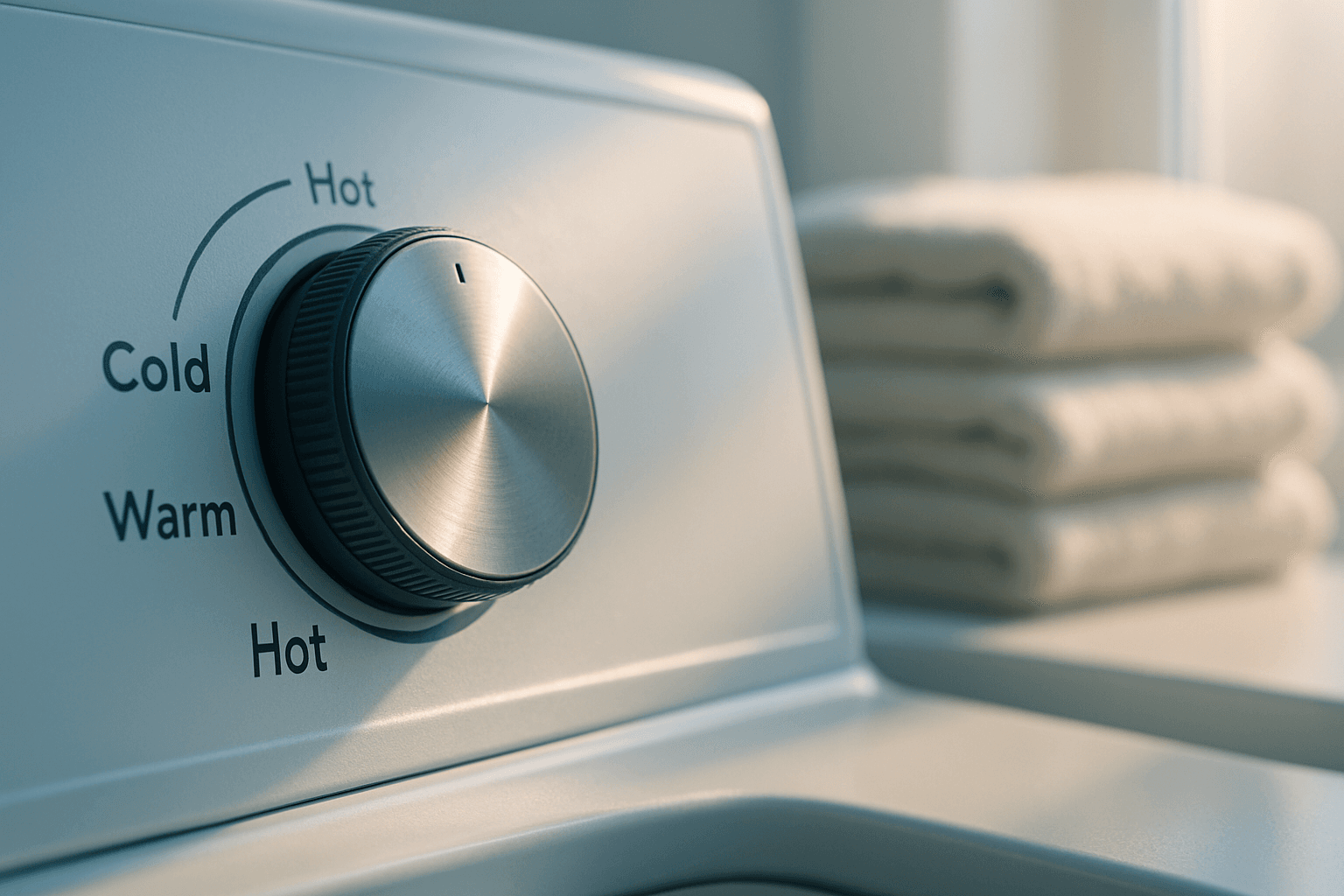
Why your washing machine's water temperature setting matters this Father's Day
As West Vancouver gears up for summer entertaining, the wrong water temperature can fade Dad's favourite shirts and damage delicate fabrics. Here's what to know before Father's Day.
Key takeaways
- Hot water removes grease and sanitises heavily soiled loads but fades colours and shrinks delicate fabrics.
- Cold water protects colours and synthetics while using 80–90% less energy than hot cycles.
- Modern detergents are formulated to work effectively in cold water, even for lightly soiled loads.
- Warm water offers a middle ground for moderately soiled mixed loads and everyday family laundry.
- West Vancouver's summer humidity means air-drying delicates after a cold wash extends garment life.
The summer laundry challenge
Father's Day is approaching, and if you're planning to host in West Vancouver, your washing machine is about to work overtime. Between entertaining guests, managing extra linens, and keeping Dad's favourite clothes looking sharp, water temperature decisions matter more than you might think. The wrong setting can fade a beloved shirt in a single wash or damage fabrics that should last for years.
Hot water: when to use it
Hot water excels at breaking down grease, removing stubborn stains, and sanitising heavily soiled items like kitchen towels and bedding. If you're washing items that have touched grass stains, mud, or cooking oil, hot water is your friend. However, hot water also causes colour bleeding—especially in darker fabrics—and can shrink natural fibres like cotton and wool. For Dad's dress shirts or any garment with dyes that matter, hot water is a risky choice.
Cold water: the modern standard
Cold water is the default setting in most of Metro Vancouver for good reason. Modern laundry detergents are engineered to activate in cold water, so you're not sacrificing cleaning power by choosing it. Cold water preserves colours, prevents shrinkage, and uses 80–90% less energy than hot cycles—a real benefit during a long summer entertaining season when your machine is running constantly. For everyday family laundry, lightly soiled clothes, and anything with colours you want to protect, cold water is the smarter choice.
Warm water: the balanced approach
Warm water sits between the two extremes and works well for moderately soiled mixed loads. It offers better stain removal than cold water without the colour-fading risks of hot. If you're washing a load of everyday clothes with a few stains, warm water is often the sweet spot.
A practical summer strategy for entertaining
During Father's Day weekend and beyond, when you're managing multiple loads a day, develop a sorting habit. Separate heavily soiled items (kitchen towels, aprons, napkins) from everyday wear. Wash the soiled items in hot water; everything else in cold. If you're using a modern detergent—and most brands sold in West Vancouver shops are—you'll see no difference in cleaning results, only in the lifespan of your clothes. Your machine will also run more efficiently, which matters when you're doing laundry back-to-back.
One final note on delicates
If you're washing anything delicate or precious—a vintage shirt, fine linens, or anything with special dyes—use cold water and consider a delicate cycle. West Vancouver's summer humidity means air-drying these items indoors or in shade will preserve them far better than machine drying ever could.
The right water temperature is one of the simplest ways to protect your clothes and reduce your water and energy use at the same time.
Need a hand from a real technician?
Our licensed pros repair washers and dryers across Metro Vancouver — same-day and next-day, with 90-day parts warranty + 7-day satisfaction guarantee.
Keep reading
Costume cleanup: why your washer's cold-water cycle needs a pre-rinse now
Halloween costumes bring mud, fake blood, and stubborn stains. Here's why a quick pre-rinse before the main wash saves your machine—and your clothes.
Why your washer's rubber seal fails after Halloween—and how to prevent it
October's damp weather and costume laundry create the perfect storm for mould growth inside your washer. Here's what White Rock homeowners need to know.