Why your dryer's moisture sensor needs cleaning before cottage season
Spring humidity and White Rock's coastal air can clog your dryer's moisture sensor. A quick cleaning now prevents damp clothes and wasted energy all summer.
Key takeaways
- Moisture sensors detect dampness to stop the cycle early—they're energy-savers, not luxury features.
- Lint and mineral buildup from our coastal air blocks the sensor's ability to read humidity accurately.
- Cleaning your sensor twice yearly (spring and fall) prevents extended dry times and reduces wear on your dryer.
- A clogged sensor is often mistaken for a broken dryer—cleaning it first costs nothing and often solves the problem.
- White Rock's sea air and spring rain increase humidity, making sensor maintenance more critical now.
If your dryer has been running longer than usual, or your clothes feel slightly damp when the cycle ends, your moisture sensor probably needs attention. It's one of the simplest maintenance tasks you can do, and it makes a real difference—especially now, as Metro Vancouver heads into the wetter months between spring showers and summer cottage trips.
What a moisture sensor does
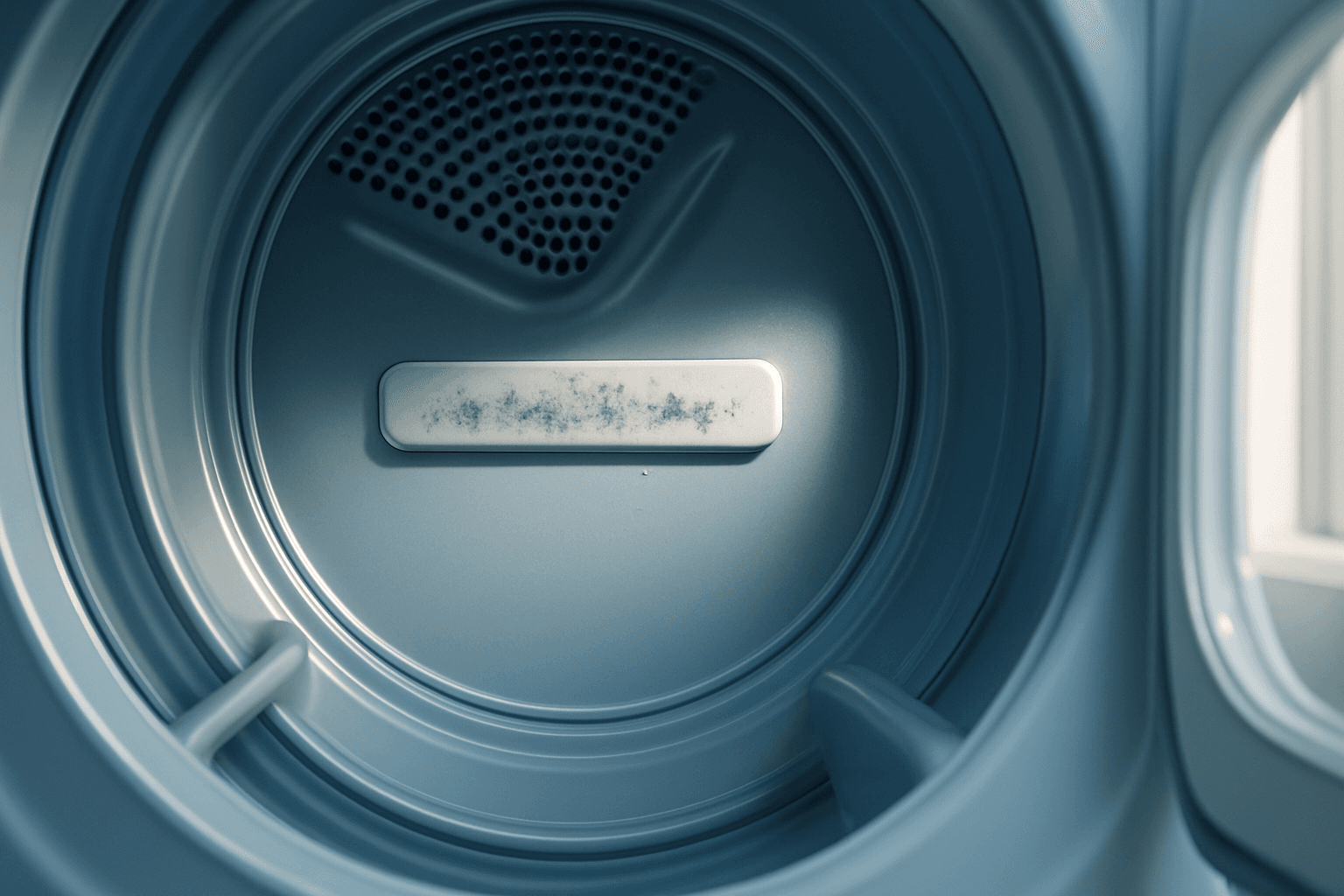
Moisture sensors are small metal strips or bars mounted inside your dryer drum or on the back wall. They work by detecting electrical conductivity: as clothes dry, the moisture level drops, the sensor detects this change, and the dryer shuts off. Without a working sensor, your dryer either runs on a fixed timer (wasting energy and heat) or keeps going until your clothes are over-dried and brittle.
It's a clever feature that saves money and extends the life of your fabrics—but only if it's clean.
Why coastal spring air clogs sensors
White Rock residents know that May brings a particular kind of dampness. The ocean is close, the rain is frequent, and humidity lingers in laundry rooms. When you're running the dryer regularly, lint particles and mineral residue from our water supply gradually coat the sensor's surface. That buildup blocks the sensor's ability to detect moisture, so it keeps signalling "still wet" even when your clothes are dry.
The result: your dryer runs 10, 15, sometimes 20 minutes longer than necessary. Your hydro bill creeps up. Your clothes get that over-dried, stiff feel. And you start wondering if something is broken—when really, the sensor just needs a wipe.
How to clean your moisture sensor
First, unplug your dryer. Safety first.
Locate the sensor—it's usually a small metal strip on the back wall of the drum or mounted on the inside front edge. Check your manual if you're unsure; most dryer manufacturers make this easy to find.
Use a soft, dry cloth or an old toothbrush to gently wipe away lint and dust. If there's stubborn mineral buildup, dampen the cloth slightly with white vinegar, wipe the sensor, then dry it completely with a clean cloth. Don't soak it or use aggressive scrubbing.
Plug the dryer back in, run a short test cycle on a damp towel, and listen for the cycle to end early. You'll notice the difference immediately.
When to do it
Spring and fall are ideal times—right before the seasons when you'll be using your dryer most heavily. If you live in White Rock or anywhere near the coast, add one extra cleaning in mid-summer if you're running the dryer frequently.
If you've cleaned the sensor and your dryer still runs long, or if you're not comfortable accessing the sensor yourself, that's when a service call makes sense. But nine times out of ten, a clogged sensor is the culprit, and a simple cleaning solves it.
Need a hand from a real technician?
Our licensed pros repair washers and dryers across Metro Vancouver — same-day and next-day, with 90-day parts warranty + 7-day satisfaction guarantee.
Keep reading
Your washer's water temperature dial: why Thanksgiving prep starts here
As Vancouver's damp autumn arrives, your washer's temperature settings matter more than you think—especially before hosting. Here's what to check.
Your washer's cold-water cycle isn't enough for autumn stains—here's why
October's mud, wine, and cranberry spills need warmer water than you think. Here's how to tackle stubborn fall stains before Thanksgiving guests arrive.